





UMPRUM courses
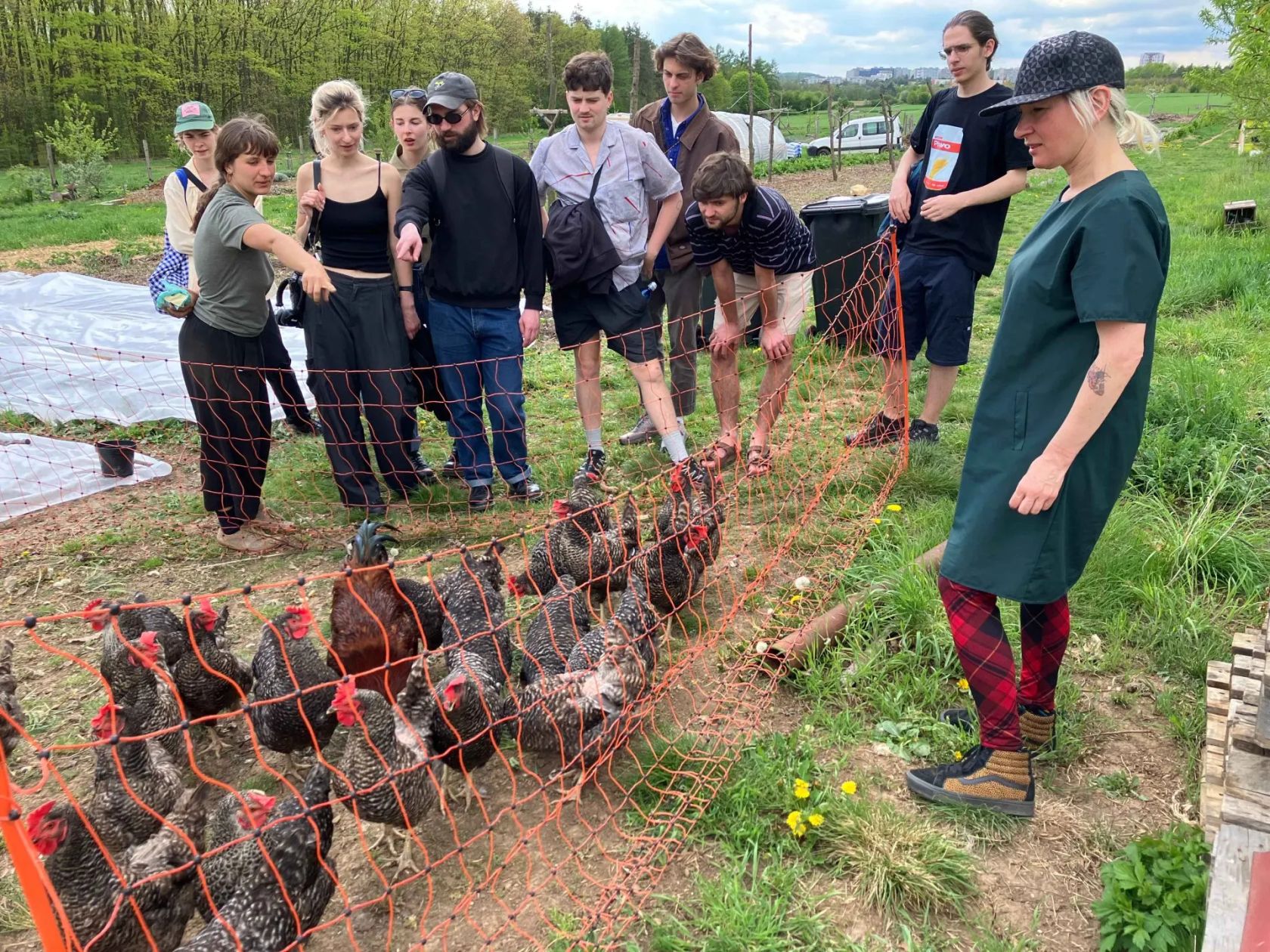
Learning from nature and with nature is a central theme running through all activities at Kafkárna. A key area of its programme, closely connected to the activities of the art university, is education, which is open both to students and the wider public. Applied ecological research and its outputs not only enrich teaching but also contribute to strengthening UMPRUM’s role as a socially engaged university.
Kafkárna: Environmental Art Thinking and Practice
Kateřina Konvalinová, Eva Koťátková, Tereza Špinková
The interdisciplinary seminar connects contemporary art, design, and agroecology, with an emphasis on environmentally conscious artistic and design practices. The content and focus of individual seminars respond not only to the specific conditions, challenges, and needs of the particular site – the UMPRUM Centre for Art and Ecology / Kafkárna – but also engage with current social and environmental issues and challenges more broadly. The course is therefore designed to respond flexibly to current developments, allowing the content of individual seminars to be adapted to specific needs and interests, with a strong emphasis on practice.
The course fills an important gap in art education: relatively few art schools offer the theoretical and practical framework for artistic practices that engage with nature through forms of relating to and collaborating with it. The course therefore creates a unique opportunity for students across all disciplines at UMPRUM and, together with Kafkárna / the UMPRUM Centre for Art and Ecology, establishes a key intersection between art, design, and ecology.
City, Landscape, Ecology
Kateřina Vídenová
The seminar City, Landscape, Ecology connects themes of critical urbanism and environmental practice. Through expert lectures, discussions with invited guests, readings of theoretical texts, and field excursions, it examines the impacts of neoliberal ideology on urban planning and ecology. It addresses, among other topics, questions of social and spatial injustice, the housing crisis and transformations of cities, ecological aspects and adaptation strategies related to the climate crisis, the ecology of food production and consumption, material and energy sustainability, and other related issues. The specific focus of the seminar is defined before the beginning of each semester. The seminar combines academic lectures with excursions and presentations by invited guests. It emphasizes an interdisciplinary approach and the exploration of topics from multiple perspectives, with the aim of developing critical urban and political imagination when thinking about the future of cities and landscapes. The course follows the logic of the Department of Fine Arts but is open to students from other departments across disciplines and study formats.
Sculptor or Gardener?
Kateřina Žák Konvalinová
The course Sculptor or Gardener? ran from 2023 to 2025 and brought together artistic practice with environmental art, ecological theory, and agroecological practice. The course was conceived as a two-semester programme, with the winter semester focusing primarily on theory and the summer semester on field trips and practical work at selected ecological farms and related ecological and community-based projects. Students engaged in a more informal seminar format that combined collective work on selected farms, shared meals, and discussions of selected texts.
The course also explored the metaphor of the garden – and gardening practices – within the broader context of contemporary artistic and ecological strategies, using the actual garden at Kafkárna as a site of research. Together with invited experts, the course examined the cultural, historical, philosophical, and social significance of the garden and its changing relationship to contemporary ways of life. It provided a space for investigating principles of decolonisation and the sedimentation of art through an exploration of the historical layers of the Kafkárna garden, as well as practices of caring for a site and a community. Invited lecturers have included Anna Hulačová, Kateřina Konvalinová, Lenka Kubelová, Ondřej Fous, Tomáš Uhnák, and others.